
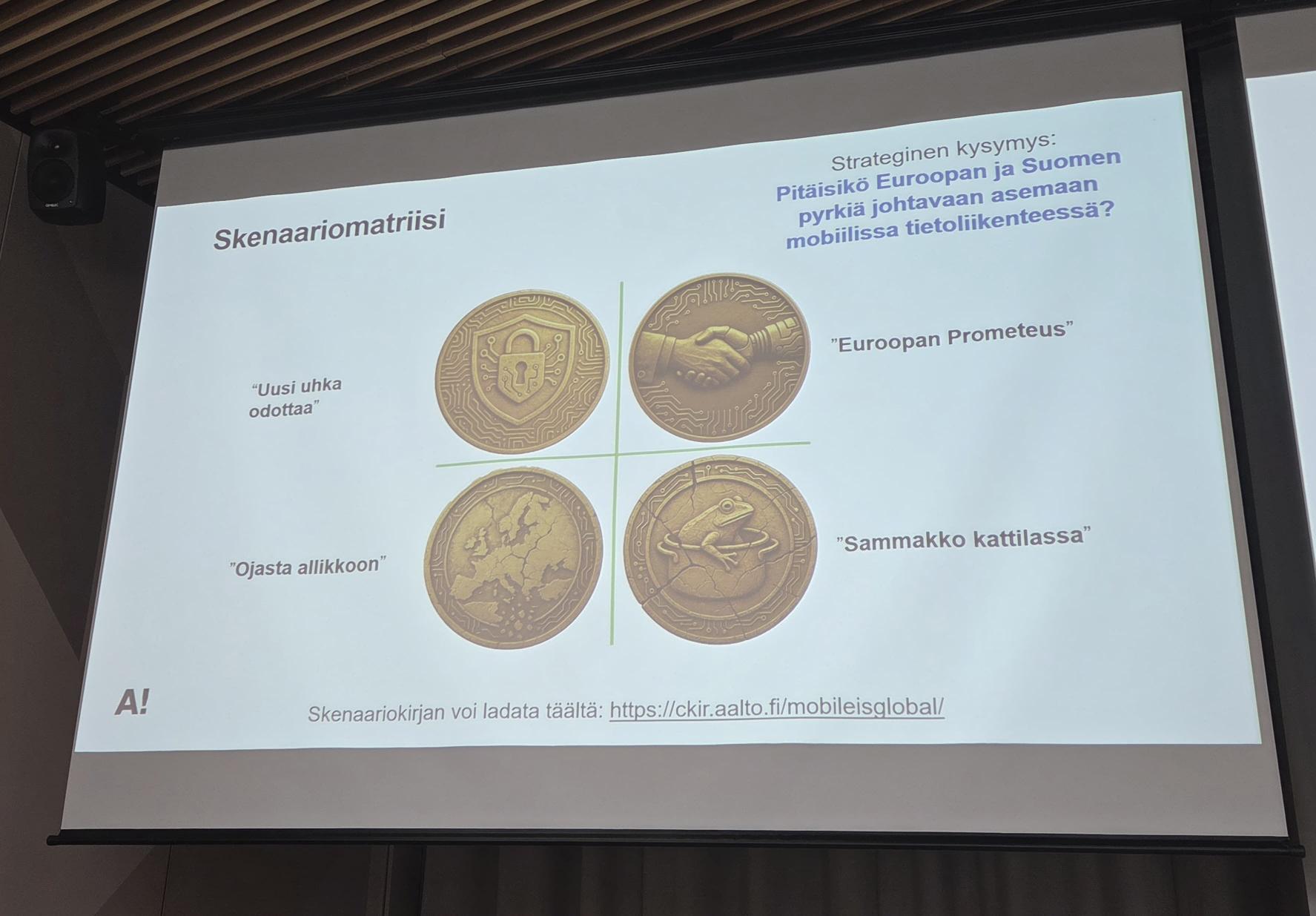
The Mobile is Global research project concluded with a final seminar on 9 June 2026 on the future of mobile communications, digital value creation and Europe’s position in the next phase of global technology competition. The event brought together perspectives from research, policy and innovation, including Aalto University, ETLA, the Ministry of Transport and Communications and Business Finland.
“The mobile network has become critical infrastructure, and it has to be protected, not just exploited. The services on the top are available services only as long as the network underneath works.” – Timo Ali‑Vehmas, Mobile is Global steering group chair (paraphrased)
The seminar underlined that value is increasingly created in services, data, software and artificial intelligence (AI) built on top of the network, while the network itself must remain reliable, secure and globally interoperable. AI is expected to influence every layer of the ICT stack, from radio network up to the application layer, pulling the whole system toward high‑value services.
The seminar highlighted a strategic tension for Europe. Technical strengths remain in networks, equipment, standards and research, but global value creation is shifting to data‑driven services and AI‑enabled ecosystems. The central policy question is how to combine trust, rights and responsible regulation with the capacity to scale new services, attract investment and compete globally.
Systemic coherence emerged as a key requirement. GSM’s success was built by aligning technology, standards, markets and regulation. The seminar asked whether Europe can recreate such alignment for the 6G era, as the European Commission’s Digital Networks Act proposal, the AI Act and other EU digital instruments interact. The point was not to remove regulation, but to ensure it also enables and directs new value creation, not only sets limits.
Geopolitics was the second major theme. Fragmentation is reshaping innovation networks, supply chains and the standards environment. In mobile, standards define where global markets form and who can access them. The discussion highlighted the need for Europe and Finland to engage actively in international standardisation and technology diplomacy.
From Finland’s perspective, the focus was on future readiness, foresight and partnerships. Finland’s strong capabilities in mobile technology and 6G research should be connected more tightly to industrial, public‑sector and international ecosystems, linking technological development to practical use cases in society and business through collaboration among researchers, companies and government.
Overall, the seminar framed the transition toward 6G as more than a telecommunications issue. It is about European digital value creation, strategic autonomy, resilience and the ability to build coherent ecosystems around new technologies.